

Popularization Trend of Ceramics
Date:
2020-12-08
With the continuous development of China's industrial modernization, in the anti-oxidation treatment of the metal industry, the industrial wastewater discharged from the traditional phosphating process contains a large amount of phosphorus, which will cause eutrophication of water bodies. Phosphating solution contains heavy metal ions, which has a strong carcinogenic effect. Therefore, the discharge of phosphorus-containing waste liquid is more and more strictly controlled, and its application is greatly limited. In order to solve these problems, the development and use of environmentally friendly non-phosphorus ceramic technology is the direction of modern development. In recent years, through continuous improvement and trial and error, the technical team has successfully solved the problem of poor corrosion resistance, complex process, low adhesion, high raw material cost and poor self-healing ability of the ceramic agent.
With the continuous development of China's industrial modernization, in the anti-oxidation treatment of the metal industry, the industrial wastewater discharged from the traditional phosphating process contains a large amount of phosphorus, which will cause eutrophication of water bodies. Phosphating solution contains heavy metal ions, which has a strong carcinogenic effect. Therefore, the discharge of phosphorus-containing waste liquid is more and more strictly controlled, and its application is greatly limited. In order to solve these problems, the development and use of environmentally friendly non-phosphorus ceramic technology is the direction of modern development. In recent years, through continuous improvement and repeated tests, the technical team has successfully solved the shortcomings of poor corrosion resistance, complex process, low adhesion, high raw material cost, and poor self-healing ability of the ceramic agent.
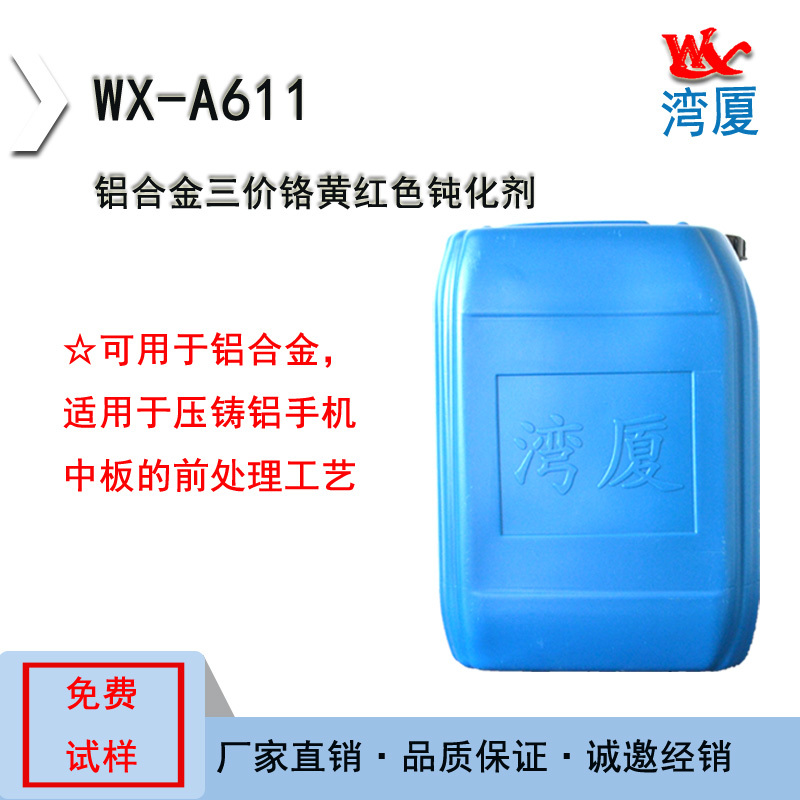
With the development of the times, metal materials are more and more widely used in our daily life and industry. For example, steel needs to undergo pretreatment processes such as degreasing and rust removal before coating, and then a chemical conversion film is formed on the metal surface through chemical treatment to protect the base metal and enhance the adhesion of the coating and the corrosion resistance of the metal to a certain extent. At present, most of the phosphorus chemical process is used. With the continuous advancement of energy conservation and emission reduction, the traditional phosphating industry has gradually failed to meet the requirements of modern environmental protection. The application of ceramic phosphorus-free film forming technology has made great changes in the chemical film forming technology of metal surface, and the new phosphorus-free conversion film is quietly replacing the traditional phosphating film.
Ceramics is a new environmentally friendly product with low energy consumption and high performance based on zirconium salt. After adding special film-forming additives, chemical treatment can be carried out on the surface of steel, zinc plate and aluminum to form hybrid insoluble nano-scale ceramic conversion film. Ceramic conversion coating has excellent corrosion resistance and impact resistance, which can improve the adhesion of the coating. No heating is required during the formation of the conversion film, and no slag is produced in the bath solution. The certifier does not contain carcinogenic substances such as phosphorus, zinc, calcium, nickel, manganese and chromium, and its waste liquid can be discharged after simple neutralization treatment. Ceramics is a new environmentally friendly product with low energy consumption and high performance based on zirconium salt. After adding special film-forming additives, chemical treatment can be carried out on the surface of steel, zinc plate and aluminum to form hybrid insoluble nano-scale ceramic conversion film. Ceramic conversion coating has excellent corrosion resistance and impact resistance, which can improve the adhesion of the coating. No heating is required during the formation of the conversion film, and no slag is produced in the bath solution. The certifier does not contain carcinogenic substances such as phosphorus, zinc, calcium, nickel, manganese and chromium, and its waste liquid can be discharged after simple neutralization treatment.
The use of ceramic agent: with tap water preparation, adding a mass percentage2.5-3% of the ceramic agent, stir evenly, and then adjust the PH value to 5.0 with an alkaline regulator. Process flow: pre-degreasing-main degreasing-washing-washing-ceramic-washing-washing-drying.
Potter
Related News

Focus on us

WEB
24-hour customer service hotline
Address: 501, 502 and 601, Building 4, Phase 2, Beijiao Qide Real Estate Park, Shunde District, Foshan City, Guangdong Province
Telephone:+86-757-23622292
Mobile:+86-13827784647
E-mail:wanxia_sd@163.com