

Development and Curing of Waterborne Epoxy Ester Resin
Date:
2021-04-26
In recent years, people pay more and more attention to environmental protection. Many countries have promulgated laws and regulations to control volatile organic compounds, and the implementation standards are becoming more and more stringent. The development of coatings to high solid content and water-based coatings has become the consensus of the coatings industry, and water-based coatings are currently the new coatings with the highest output and demand. Epoxy resin has the characteristics of good chemical stability, good adhesion and high electrical insulation. How to make waterborne epoxy ester resin has become the focus of research on waterborne coatings in various countries.
In recent years, people pay more and more attention to environmental protection. Many countries have promulgated laws and regulations to control volatile organic compounds, and the implementation standards are becoming more and more stringent. The development of coatings to high solid content and water-based coatings has become the consensus of the coating industry, in which water-based coatings are new coatings with high production and demand. Epoxy resin has the characteristics of good chemical stability, good adhesion and high electrical insulation. How to make waterborne epoxy ester resin has become the focus of research on waterborne coatings in various countries.
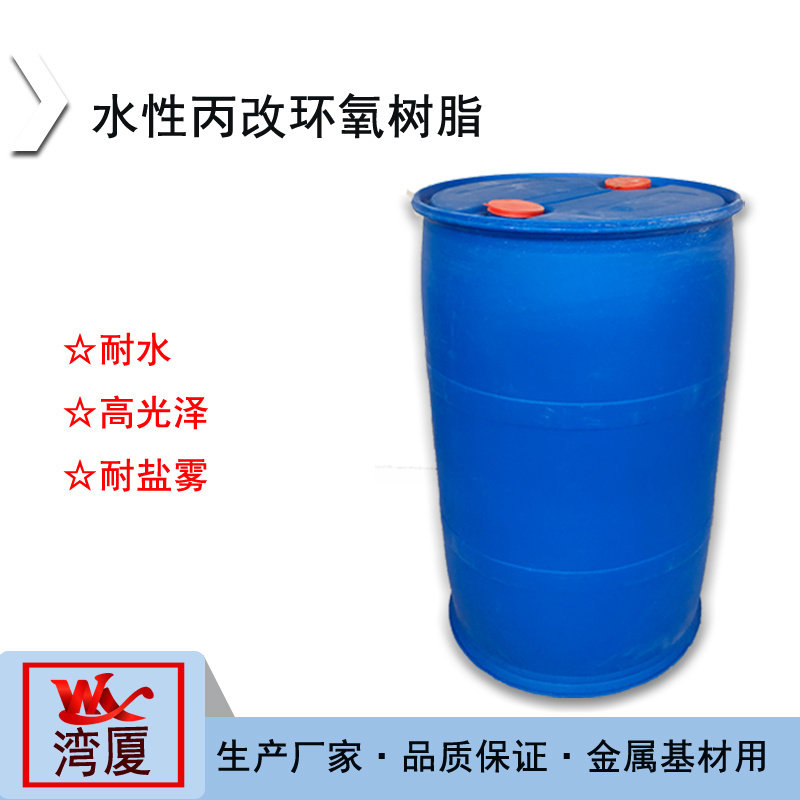
The main features of waterborne epoxy ester resins are excellent corrosion resistance, low volatile organic compound content, low odor, safe use and water cleaning. In addition to automotive coatings, waterborne epoxy ester resins can also be used in metal can coatings, electrical appliances, medical devices and other fields. Although the raw material price of waterborne epoxy coatings is higher, with the continuous maturity and development of production technology, waterborne epoxy coatings have great attraction in industry and commerce. At present, the water-based epoxy ester resin coatings widely used in the market are mainly composed of two components: one is a hydrophobic epoxy ester resin; the other is a hydrophilic amine curing agent.
The main methods of waterborne epoxy ester resin are as follows:1 The epoxy resin is mechanically ground with a ball mill and a colloid mill, and an emulsifier is added and vigorously stirred to obtain an epoxy resin dispersion. The preparation of waterborne epoxy resin dispersion system by this method is simple and low cost, but there are also some problems, such as large particle size.(10Micron)The emulsion will delaminate after a long time.2Adding emulsifier to epoxy resin is actually a reverse phase process in which the continuous phase of small molecule emulsion is changed from oil phase to water phase.3Chemical modification A certain amount of strong hydrophilic groups, such as multi-carboxyl, multi-hydroxyl or amine compounds, are introduced into the epoxy resin skeleton to make it hydrophilic.
There are many kinds of waterborne epoxy ester resins, mainly divided into unmodified fatty amino-terminated polyamides, acid salts of fatty amino-terminated polyamides, fatty amino-terminated polyamides.-Epoxy adducts, modified fatty amino-terminated polyamide compounds, epoxy adducts of fatty amines and fatty amines, amino acrylic acids, etc. At present, modified fatty amino-terminated polyamide compounds are widely used. Their modification includes addition and substitution to improve their solubility and stability in water and the performance of the final coating. Waterborne epoxy resin has opened up a new field for the application of epoxy resin, and the market prospect is very optimistic. The development of low-cost, high-performance waterborne epoxy ester resin products has become a top priority.
Waterborne epoxy ester resin
Related News

Focus on us

WEB
24-hour customer service hotline
Address: 501, 502 and 601, Building 4, Phase 2, Beijiao Qide Real Estate Park, Shunde District, Foshan City, Guangdong Province
Telephone:+86-757-23622292
Mobile:+86-13827784647
E-mail:wanxia_sd@163.com