

Waterborne epoxy ester resins have broad application prospects in the fields of vehicles and steel structures.
Date:
2021-04-12
In recent years, with people's attention to their own health and the increasingly stringent national environmental regulations, environmentally friendly water-based coatings have developed rapidly. Industrial waterborne coatings mainly include waterborne acrylate coatings, electrophoretic coatings, waterborne epoxy ester resins, waterborne polyurethane coatings, waterborne alkyd resins and their modified resin coatings.
In recent years, with people's attention to their own health and the increasingly stringent national environmental regulations, environmentally friendly water-based coatings have developed rapidly. Industrial waterborne coatings mainly include waterborne acrylate coatings, electrophoretic coatings, waterborne epoxy ester resins, waterborne polyurethane coatings, waterborne alkyd resins and their modified resin coatings.
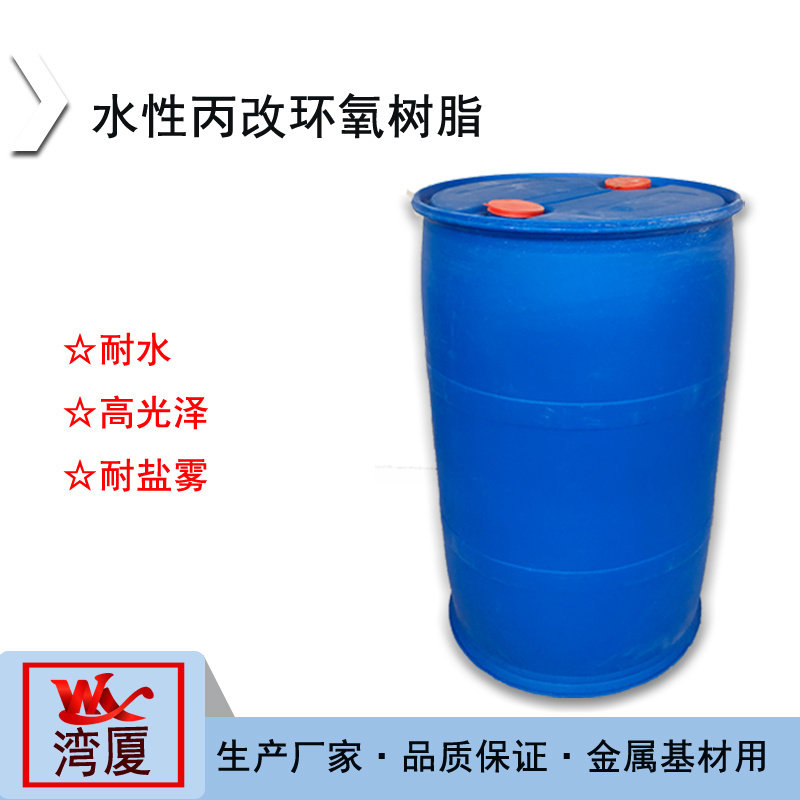
Waterborne epoxy ester resin is a water-dispersible epoxy resin designed for water-based self-drying paint and water-based low-temperature baking paint. When making coatings, it is necessary to add water-based drier to assist crosslinking; salt spray resistance, water resistance, weather resistance, high gloss and other outstanding properties; good adhesion to various metal substrates; good hydrolysis resistance; the preparation of water-based coating stability.
Epoxy resin can be prepared by ring-opening reaction with vegetable oil fatty acid, and then waterborne epoxy ester resin is obtained. Epoxy ester has many excellent characteristics of drying oil and epoxy resin at the same time: it has improved corrosion resistance, because it contains epoxy resin; it can be oxidized and crosslinked at room temperature, because it contains unsaturated fatty acid components, it also improves the protective performance. Its reliance on petroleum products is relatively small, due to the introduction of vegetable oils, a renewable resource. Compared with alkyd resin, epoxy ester resin has excellent corrosion resistance, higher hydrolysis resistance and excellent adhesion. At present, the waterborne technology of epoxy ester resin has been mature, and epoxy ester anti-rust coatings are widely used in the field of anti-corrosion because of their good salt spray resistance. However, waterborne epoxy ester resin coatings have the disadvantages of poor weather resistance and slow drying speed.
Waterborne epoxy ester resin with good weather resistance, good flexibility, fast drying speed, good color retention and good hardness can be prepared by acrylic modified epoxy resin. By introducing acrylate segments, the glass transition temperature of the resin was increased, and the drying speed of the paint film was effectively improved. Acrylic modified waterborne epoxy ester resin usually has two kinds of hydration methods:1 The carboxyl group-containing acrylic resin and the epoxy ester half-ester resin are first synthesized separately, the carboxyl group-containing acrylic resin and the epoxy ester half-ester resin are then esterified, and the hydrophilic portion of the remaining acrylic polymer provides water dispersibility of the mixed resin.2An epoxy ester is first prepared, and then the epoxy ester is copolymerized with an acrylic monomer to obtain a mixture of an epoxy ester, an acrylic epoxy ester, and an acrylic polymer. The hydrophilic portion of the acrylic polymer provides water dispersibility of the hybrid resin.
Waterborne epoxy ester resin obtained good fast drying, water resistance and corrosion resistance by grafting modification, which improved the shortcomings of traditional waterborne epoxy resin, such as slow drying speed, low hardness and poor weather resistance. It has broad application prospects in the fields of vehicles, engineering machinery parts, steel structures and so on.
Waterborne epoxy ester resin
Previous Page
Next Page
Related News

Focus on us

WEB
24-hour customer service hotline
Address: 501, 502 and 601, Building 4, Phase 2, Beijiao Qide Real Estate Park, Shunde District, Foshan City, Guangdong Province
Telephone:+86-757-23622292
Mobile:+86-13827784647
E-mail:wanxia_sd@163.com